

Most people assume creative direction starts with visuals. They jump straight into moodboards, color palettes, or design references. However, that approach skips the most important part of the process. Creative direction is not where you begin. It is what you build after clarity is established.
The creative direction process is the system that shapes how a brand looks, sounds, and feels across every touchpoint. When done well, it ensures that everything works together instead of competing for attention. If your brand feels inconsistent or unclear, the issue is not creativity. It is a lack of direction.
What Is the Creative Direction Process?
At its core, the creative direction process translates strategy into expression. It defines:
- how your brand presents itself visually
- how it communicates verbally
- how content is structured and delivered
- how the overall experience comes together
Without a defined process, brands make isolated decisions. As a result, visuals, messaging, and content drift out of alignment. Over time, that inconsistency weakens recognition and trust. A clear process prevents that fragmentation by creating structure across every decision. If you want to understand how those inconsistencies shape audience interpretation, explore How to Influence Brand Perception.
Why the Creative Direction Process Matters
Strong brands do not rely on random creative choices. Instead, they rely on alignment. When you apply a clear process, you can:
- create cohesive visuals
- maintain a recognizable voice
- produce consistent content
- build trust with your audience
- scale without losing clarity
In contrast, when direction is missing, even high-quality work feels disconnected. Structure does not limit creativity. It strengthens it.
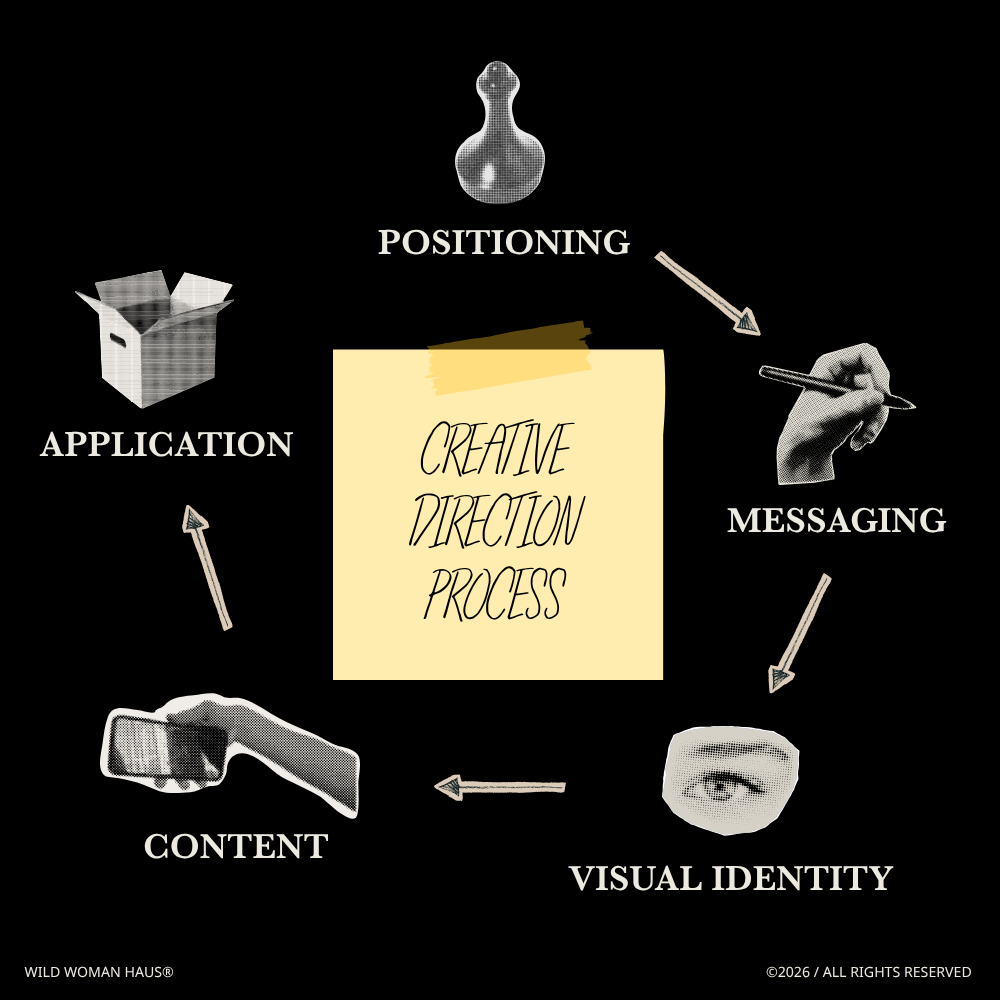
Step 1: Start With Brand Strategy
First, establish clarity before making any creative decisions. Define:
- who you are
- who you serve
- what you stand for
- what differentiates you
This foundation guides everything that follows. If you skip this step, creative decisions become arbitrary. Although visuals may look polished, they will not communicate anything meaningful.
Step 2: Clarify Brand Voice and Messaging
Next, translate your strategy into language. Determine:
- tone of voice
- vocabulary
- key messages
- communication style
Because creative direction is both visual and verbal, messaging must align with the same identity your visuals express. If your brand looks refined but sounds generic, the experience breaks down. To refine this layer, read How to Develop Your Brand Voice.
Step 3: Translate Strategy Into Visual Direction
Once messaging is clear, move into visual expression. Define elements such as:
- color palette
- typography
- imagery style
- layout direction
At this stage, the goal is not to choose what looks good. Instead, focus on selecting visuals that reinforce your positioning and perception. Strong visuals communicate meaning. They do not exist as decoration. For personal brands especially, this often shows up through a consistent visual identity. You can explore this further in Personal Brand Signature Style and Personal Style Categories.
Step 4: Define Content Direction
After establishing visual and verbal direction, structure your content. Clarify:
- what content you create
- how it is organized
- what role each piece plays
Without this step, content becomes reactive. Brands post frequently, but nothing builds over time. By contrast, a clear direction ensures that each piece contributes to a larger narrative.
Step 5: Apply Direction Across Touchpoints
Now, implement the direction consistently. Carry it across:
- your website
- social platforms
- email communication
- onboarding and client experience
- marketing materials
At this point, cohesion becomes visible. A brand should not feel polished in one place and disconnected in another. Instead, every interaction should reinforce the same identity.
Step 6: Refine and Maintain the System
Finally, maintain the direction as your brand evolves. As new offers, platforms, and campaigns emerge, revisit your direction to ensure alignment.
Regularly evaluate:
- inconsistencies
- diluted messaging
- off-brand visuals
- disconnected experiences
If you need a structured way to evaluate this, start with Brand Identity Audits. Rather than treating creative direction as a one-time task, approach it as an ongoing system. Strong brands do not just create direction. They refine it continuously.
What the Creative Direction Process Is Not
Although many brands think they have direction, they often mistake outputs for the process. It is not:
- a moodboard alone
- a logo project
- a one-time rebrand
- a collection of content ideas
- trend-based inspiration
Those are components, not the system itself. The process ensures that every output works together instead of existing in isolation.
Signs You Need a Clearer Creative Direction Process
Your brand may need stronger direction if you notice:
- inconsistent visuals across platforms
- messaging that shifts depending on context
- content that lacks cohesion
- a polished appearance without recognition
- audience confusion around your offer
- stalled or uneven growth
In each case, the issue is not effort. It is coordination.
Final Thoughts
Ultimately, the creative direction process turns scattered ideas into a cohesive system. It gives structure to your creativity so that every decision reinforces your identity instead of diluting it. As a result, your brand becomes easier to recognize, easier to trust, and easier to grow.
If you want a deeper, more comprehensive breakdown of how creative direction works in branding, read: Creative Direction: What It Is, Why It Matters, and How to Apply It. Explore Brand Strategy Intensives or learn more about Retainer Partnerships to build a brand that is structured, aligned, and designed to grow.

