

Creative Direction Is Not Just Aesthetic. It’s Strategy.
Most founders don’t have a creativity problem. They have a clarity problem. What brands usually label as “creative direction” is often just a mix of visuals, content ideas, and whatever is currently trending. A season specific color palette. A mish-mashed moodboard. A few references pulled from brands that look successful.
But none of that is strategic creativity or brand direction. It’s output without structure. As a result, brands feel inconsistent. Ultimately, this is why their content doesn’t connect with their audience, and why their visuals look good in isolation but fail to build recognition over time.
Creative direction is not about making things look better. It’s about making them make sense with your brand’s purpose. At its core, creative direction is the system that aligns how a brand shows up, visually, verbally, and experientially, so that every touchpoint reinforces the same identity. Without it, you get noise, which eventually leads to creative failure. But with it, you get cohesion, recognition, and growth that compounds.
What Is Creative Direction in Branding?
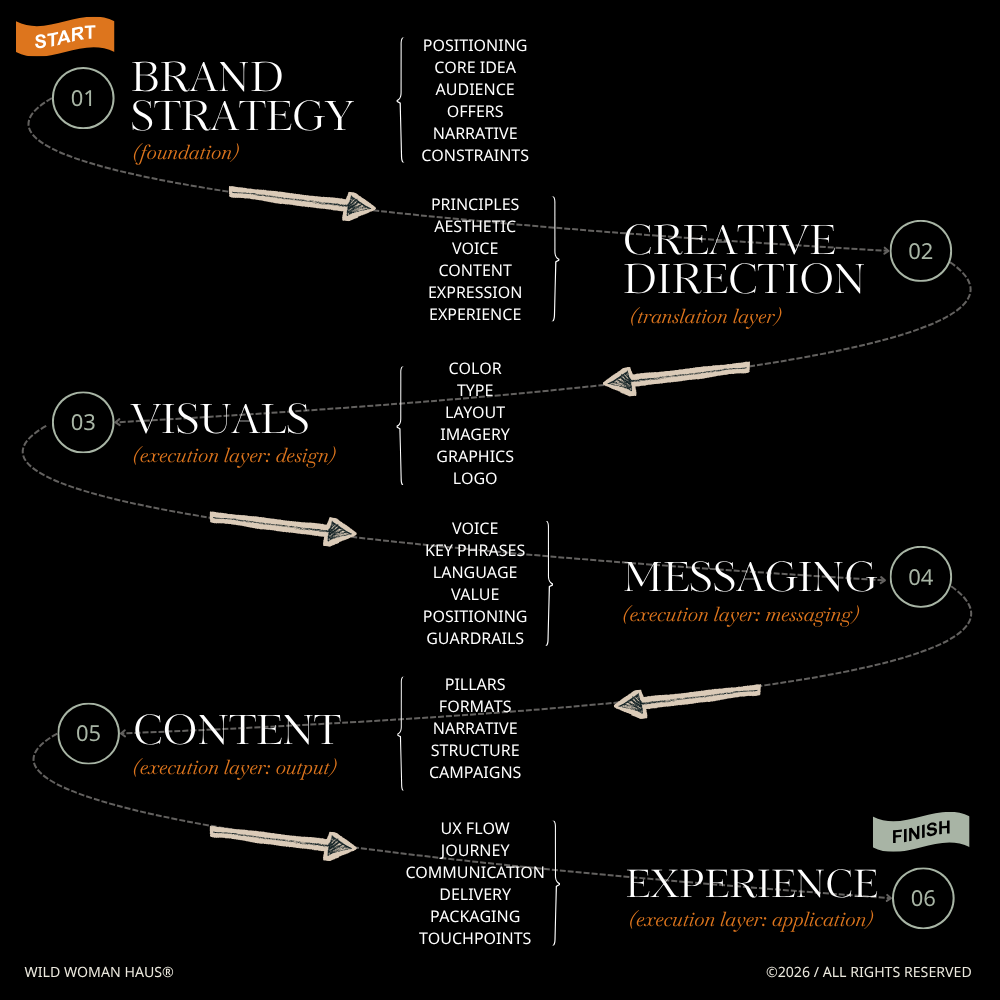
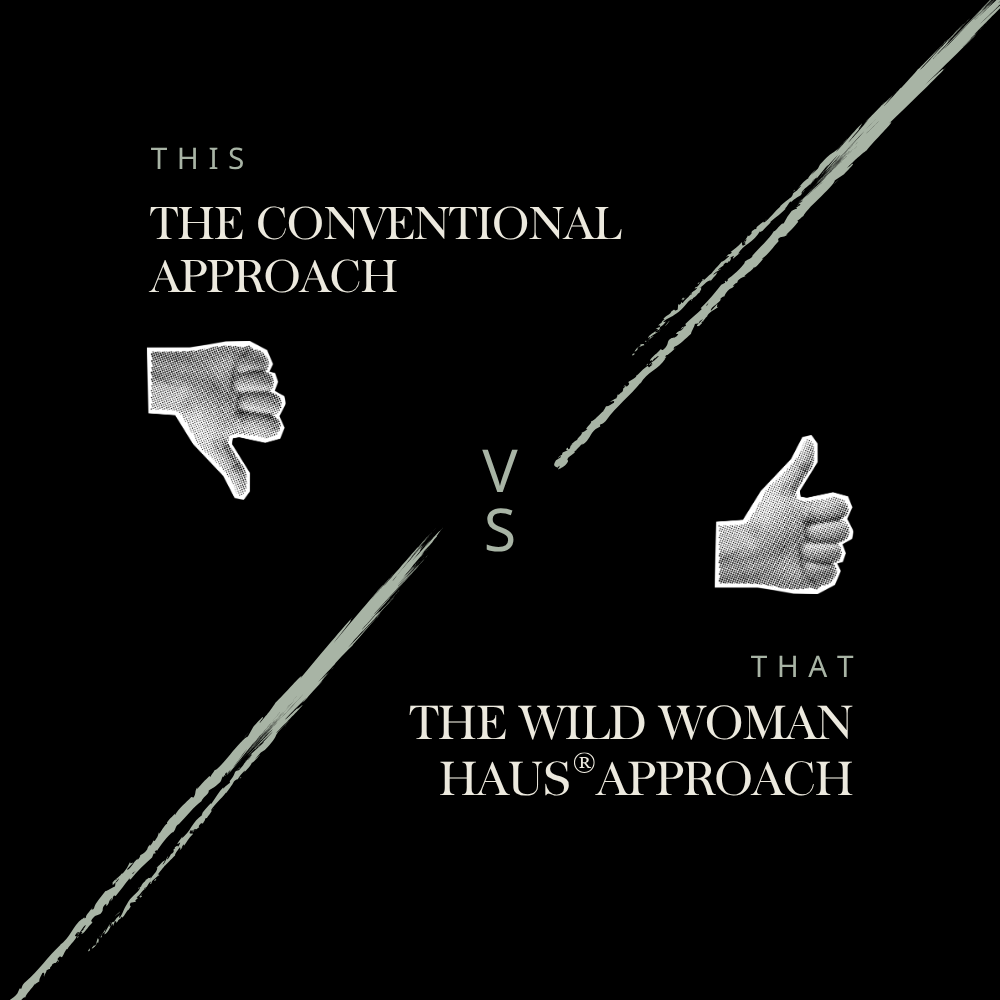
Most conventional approaches to creative direction treat it as an output.
It becomes:
- a moodboard
- a visual identity
- a campaign concept
- a set of design decisions made at a single point in time
In this model, creative direction is often aesthetic-first. It focuses on how a brand looks, sometimes how it sounds, but rarely how it functions as a system. That is where most brands break. Because without structure, even strong creative work becomes fragmented. It may look good in isolation, but it does not build recognition, trust, or long-term equity.
At Wild Woman Haus®, we don’t treat creative direction as output. It is infrastructure. We define creative direction as the strategic process of shaping how a brand looks, feels, and communicates across every touchpoint. It connects brand positioning and messaging to visual identity, content, and customer experience.
Not just design, not just content, and not a one-time set of creative decisions. It is an ongoing, evolving system of resonance and coordination. Creative direction ensures that everything a brand produces, its visuals, language, content, and interactions, works together as a unified whole. A brand without direction might still produce strong individual assets. But those assets do not build anything with longevity.
They fail to reinforce each other. Perception remains shallow. And a clear, memorable identity never establishes. Creative direction is what turns individual pieces of expression into a brand that people can recognize, trust, and remember.
Why Creative Direction Matters for Brand Growth
Consistency Builds Trust
If you remember nothing else, let it be this: people trust what feels stable. When a brand shows up inconsistently (different visuals, shifting tone, unclear messaging) founders might think they are being artistic, when in reality, they are creating friction. Their audience has to re-evaluate what they’re looking at every time they encounter the brand. Sound exhausting? It is, even if subconsciously.
Not only does this ask your consumer to do a lot of unnecessary cognitive processing, but it gives them whiplash. That whiplash reduces trust. You want people to feel safe leaning in, and inconsistency destroys safety.
Research supports this. Consistent brand presentation increases revenue by up to 33%, reinforcing how critical cohesion is to trust and performance (Lucidpress, The State of Brand Consistency). Creative direction removes that friction by creating consistency across every interaction. It ensures that the brand feels familiar, even when the content changes. And familiarity is what builds trust over time.
Direction Creates Recognition
Recognition is not built through repetition alone. It’s built through intentional repetition. Without direction, repetition becomes random. A brand might post frequently, but nothing sticks because there’s no underlying system connecting what’s being shared.
Creative direction creates patterns:
- visual patterns
- messaging patterns
- content structures
These patterns allow an audience to recognize a brand instantly, even before they consciously process it. In fact, research shows it takes multiple brand interactions before recognition and recall are established, often cited as 5 to 7 impressions to begin forming memory (Forbes). That recognition is what turns attention into recall.
Alignment Drives Growth
Growth is not just about reaching more people. It’s about converting attention into action.
Today’s marketplace is noisy and congested. What used to be simple is now complex. Consumers are overwhelmed, tired, and highly skeptical. Edelman’s Trust Barometer consistently shows that trust is now a primary factor in consumer decision-making, often outweighing price or convenience. It is the responsibility of founders to use clear creativity to help their customers feel steady, at peace, and aligned with the investments they make into your brand.
When a brand’s visuals, messaging, and content are aligned, the customer experience becomes fluid. People understand what the brand offers, who it’s for, and why it matters. They don’t hesitate, they jump in.
When they’re not aligned, confusion slows everything down. And you may not get another chance to capture their attention. Research from Behavior and Information Technology shows that users form impressions about a brand in milliseconds, meaning clarity and cohesion must be immediate. The market moves fast, and so do consumers.
Clear and strategic creative direction ensures that:
- positioning is visible
- messaging is reinforced
- content supports the same narrative
That alignment is what allows a brand to take on an architect’s mindset and scale without losing clarity or integrity.
What Does Creative Direction Include in a Brand?
Creative direction is not one thing. It’s a system made up of multiple components that work together.
Visual Identity
This includes the design system that shapes how a brand looks:
- color palette
- typography
- layout structure
- imagery style
But more importantly, it defines how those elements are used consistently, not just what they are.
Messaging Alignment
Creative direction ensures that the brand’s voice, tone, and language reflect its positioning.
This includes:
- how the brand speaks
- what it emphasizes
- what it avoids
If your brand voice is undefined, your content will feel disconnected, no matter how strong the visuals are. For a deeper breakdown, see How to Develop Your Brand Voice.
Content Direction
Content without direction becomes reactive.
Creative direction defines:
- what gets created
- how it gets structured
- what role each piece of content plays
It ensures that content is not just frequent, but intentional. This directly ties into the difference between strategy and execution. If you need clarity here, see Marketing Strategy vs Content Strategy.
Brand Expression
Brand expression is where strategy becomes visible.
It’s how your positioning shows up in:
- visuals
- messaging
- storytelling
- creative decisions
If brand strategy is internal, brand expression is external. For a deeper look, explore Brand Expression: How to Turn Strategy Into Storytelling and Presence.
Customer Experience
Creative direction extends beyond marketing. It shapes how the brand feels in practice:
- website experience
- onboarding
- communication
- delivery
Every interaction contributes to perception. Creative direction ensures those interactions are aligned.
The Creative Direction Process: How Brand Direction Is Built
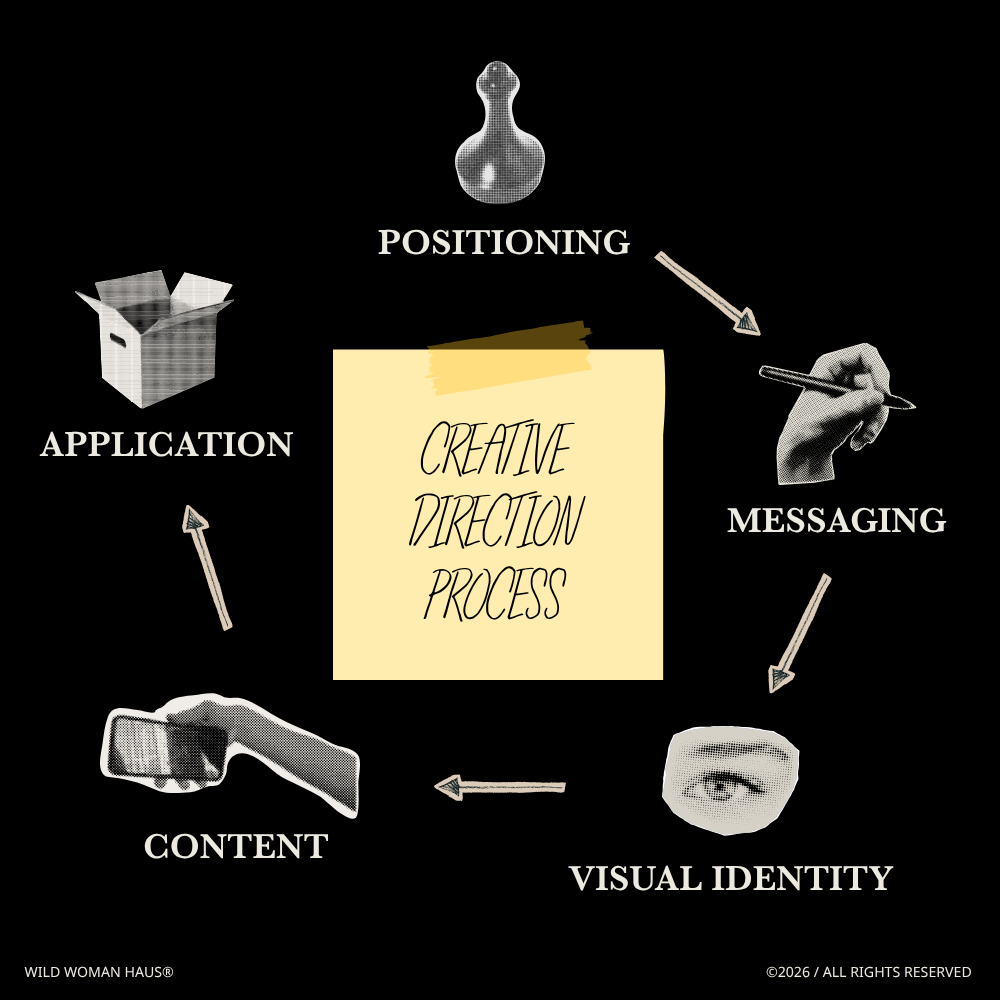
Creative direction is not guesswork. It follows a structured process. If you’re new to this concept, you can start with a simplified breakdown in Creative Direction Process 101 before diving into the full framework in this article.
1. Define Brand Positioning
Before anything visual or creative is developed, the brand must be clear on:
- who it is
- who it serves
- what differentiates it
Without this, creative decisions become arbitrary.
2. Clarify Messaging and Voice
Once positioning is defined, it needs to be translated into language.
This includes:
- tone
- vocabulary
- key messages
- communication style
This step ensures that what the brand says is as intentional as how it looks.
3. Translate Into Visual Identity
Only after positioning and messaging are clear should visual identity be developed.
This ensures that:
- design choices are strategic, not aesthetic guesses
- visuals reinforce the brand’s positioning
4. Align Content and Marketing
Creative direction is applied to content systems:
- social media
- blog
- campaigns
This step ensures that content is cohesive and builds over time.
For example, your Social Media Presence should reflect the same direction as your website and long-form content.
5. Apply Across All Applications and Touchpoints
The final step is implementation.
Creative direction must extend across:
- website
- marketing
- client experience
- internal materials
Consistency across touchpoints is what makes a brand feel complete.
Creative Direction vs Brand Strategy: Understanding Brand Direction
These two are often confused, but they serve different roles. Brand strategy is the foundation.
It defines:
- who you are
- what you stand for
- who you’re for
- how you position yourself in the market
Creative direction is the expression.
It defines:
- how that strategy shows up
- how it looks
- how it sounds
- how it feels in practice
Without brand strategy, creative direction has no anchor. Without creative direction, brand strategy stays abstract. You need both for a brand to function.
How Creative Direction Shows Up in Real Brands
Example: Luxury Lifestyle Brand

In a luxury skincare brand, creative direction might show up through:
- minimal, refined visuals
- precise, elevated language
- slow, intentional content pacing
Every element reinforces exclusivity and quality.
See: Luxury Lifestyle Brand Strategy: How We Built Houston’s Exclusive Beauty & Wellness Guide
Example: Content Creator to Lifestyle Brand







In a creator-led brand, creative direction often transforms:
- scattered content into a defined narrative
- personality into a structured brand identity
See: Brand Strategy for Content Creators: How Kelly’s Book Nook Became a Trademarked Lifestyle Brand
Why Most Brands Get Creative Direction Wrong

Most brands don’t fail because they lack effort. They fail because their effort is messy and misdirected.
1 – Chasing Trends
Trends create short-term visibility but long-term inconsistency. Without direction, brands constantly shift to keep up, losing clarity in the process.
2- Lack of Consistency
Inconsistent visuals and messaging dilute recognition. Even strong individual assets lose impact if they don’t connect.
3- Disconnect Between Strategy and Visuals
When visuals are created without strategic grounding, they may look good, but they won’t communicate anything meaningful.
4 – Content Without Direction
High output does not equal progress. Without direction, content becomes noise instead of a system that builds authority.
When Your Brand Needs Creative Direction
Most brands don’t realize they need creative direction until something feels off.
Common signals include:
- inconsistent visuals across platforms
- unclear or shifting messaging
- content that doesn’t convert
- difficulty maintaining a cohesive presence
- stalled or plateaued growth
If your brand feels fragmented, it’s not a content problem. It’s a direction problem.
Build a Brand That Moves With Intention
Creative direction is what turns a brand from reactive to intentional. It aligns how you show up, so every decision reinforces your identity instead of diluting it. If your brand feels scattered, unclear, or inconsistent, the solution is not more content. It’s better direction.
Explore Brand Strategy Intensives or learn more about Retainer Partnerships to build a brand that is structured, aligned, and designed to grow.

