

Introduction
Most brands sell products, but few create culture. Campaigns fade, while culture compounds. When your brand operates as a living system, guided by purpose, structured by positioning, and expressed through memorable experiences, loyalty evolves into community, and community matures into legacy. This article explores how to move from brand to culture by translating strategy into systems, storytelling, and signals people can truly feel.
TL;DR — From Brand to Culture
- Most brands sell products; few create culture.
- Culture begins when your why, what, and how align into one system.
- Resonance turns loyalty into community, and community into legacy.
- Every story, system, and signal becomes a cultural act.
- Brands that design for reciprocity don’t fade, they endure.
What “From Brand to Culture” Really Means

Brand as Identity
Brand is recognition: the story, signals, and experiences people associate with your name. It starts with clarity of why (purpose) and what (offers, audience, positioning).
Culture as Impact
Culture is belonging: the shared meanings, rituals, and relationships that form around your brand. It’s what people say, share, and stay for, long after a campaign ends. Every decision shapes brand as culture, see why culture is the foundation ↗.
Why Brands Fail (and Cultures Endure)
The Problem With Tactics-First Growth
- Hype without a center: launches that spike and vanish.
- Mixed signals: inconsistent messaging across channels.
- Resource waste: attention burned on trends instead of systems.
The Advantage of Culture-Driven Business
- Emotional resonance: people feel “this is for me.” 70% of people across 25 countries say they buy from brands they believe reflect their own principles (WeForum / Ipsos Global Trends), identity deeply influences not just how you feel, but whom you buy from.
- Coherence: every touchpoint reinforces the same identity. 87% of shoppers say they’ll pay more for products from brands they trust (Salsify Consumer Research 2025), trust isn’t nice; it’s premium.
- Compounding effects: retention, referrals, and reputation grow over time.
How to Build Culture Through Brand
Step 1 — Anchor in Clarity of Why + What
- Why (Meaning): the value you create beyond profit (both literal skills/outcomes and abstract perspective from lived experience). 84% of people globally report the need to share values with a brand to use it (Edelman Trust Barometer, 2024), clarity of purpose isn’t optional, it’s expected.
- What (Structure): offers, audience focus, and positioning that set you apart. Result: decisions stop drifting; identity solidifies.
- What (Structure): offers, audience focus, and positioning that set you apart. Result: decisions stop drifting; identity solidifies.
Step 2 — Design Systems of Resonance
- Branding pulls: identity and experience create gravity.
- Marketing pushes: channels and campaigns amplify what already resonates.
- Story bridges: it translates why + what into memory people can repeat.
Step 3 — Activate Reciprocity
- Deliver value before and after purchase.
- Earn trust through consistency. 92% of consumers trust referrals from people they know, making word-of-mouth one of the most powerful forms of amplification for cultural growth (Project-Aeon Retention Stats), watch retention and referrals rise, the clearest signals that culture is forming.
- Watch retention and referrals rise, the clearest signals that culture is forming.
From Transactions to Movements
The Role of Archetypes
Archetypes map to universal human desires, safety, belonging, freedom, mastery, joy. Choosing a primary archetype gives your brand a recognizable emotional stance that fuels recognition (current identity) and aspiration (preferred identity).
Storytelling as Culture Creation
Story turns information into memory. Effective stories:
- Clarify identity (who you are and why you matter).
- Build trust (proof, promises kept, repeatable experiences).
- Create meaning (people see themselves, then share and return). Culture is what turns transactions into movements, here’s how transformation works ↗.
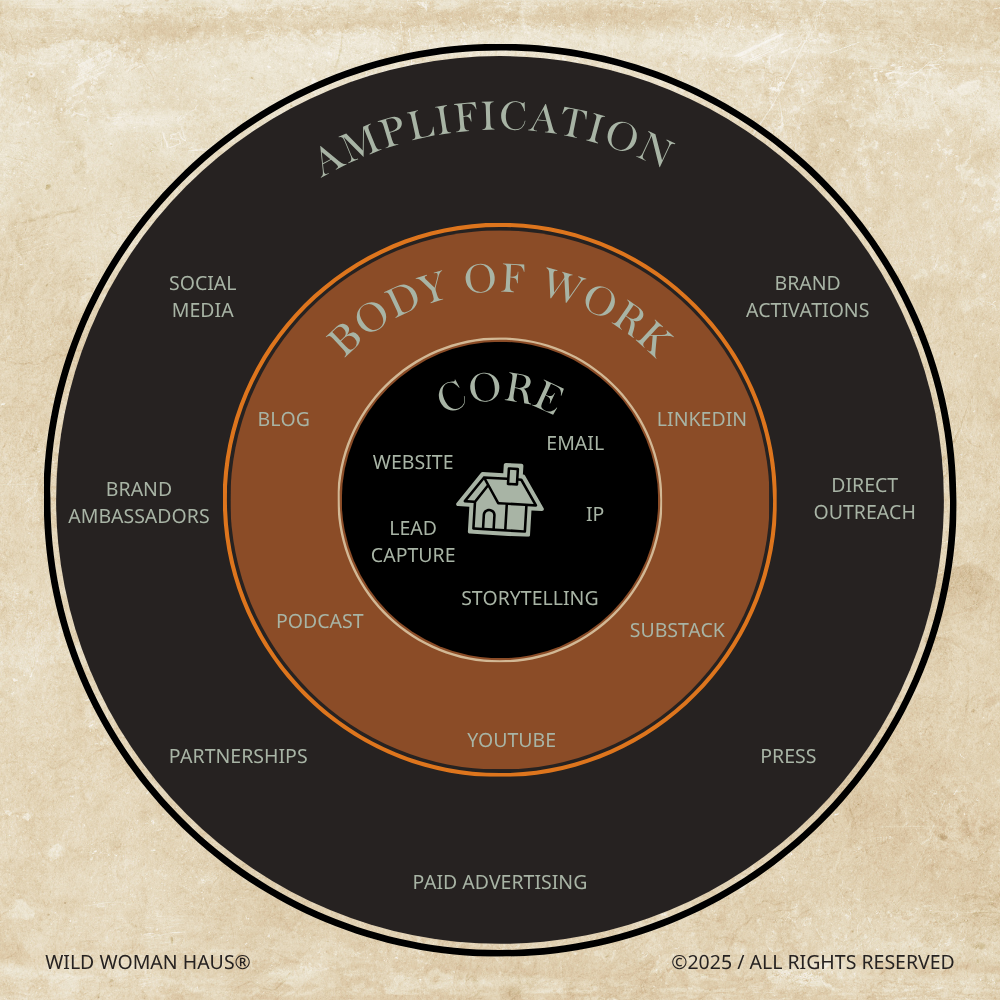
Practical Framework — The Concentric System (Home → Surrounding → Amplification)
Home (Owned Assets)
- Website: your anchor, clear promise, proof, and paths to act.
- Email: your newsroom, permissioned, reciprocal, consistent.
- Story Library: long-form depth (blog, podcast, YouTube, Substack) that compounds authority.
Surrounding (Narrative Signals)
- Social: micro-stories and invitations; redirect to your home.
- Partnerships: borrowed trust and aligned audiences.
- PR/Press: larger stages that echo your core narrative.
Amplification (Cultural Touchpoints)
- Activations/Experiences: sensory anchors that people remember.
- Community Spaces: forums, cohorts, memberships, where reciprocity and retention live.
Sequence matters: Strengthen the Home, expand the Surrounding, then add Amplification. Skipping the center collapses the outer rings.
What Happens When This Strategy is Applied:
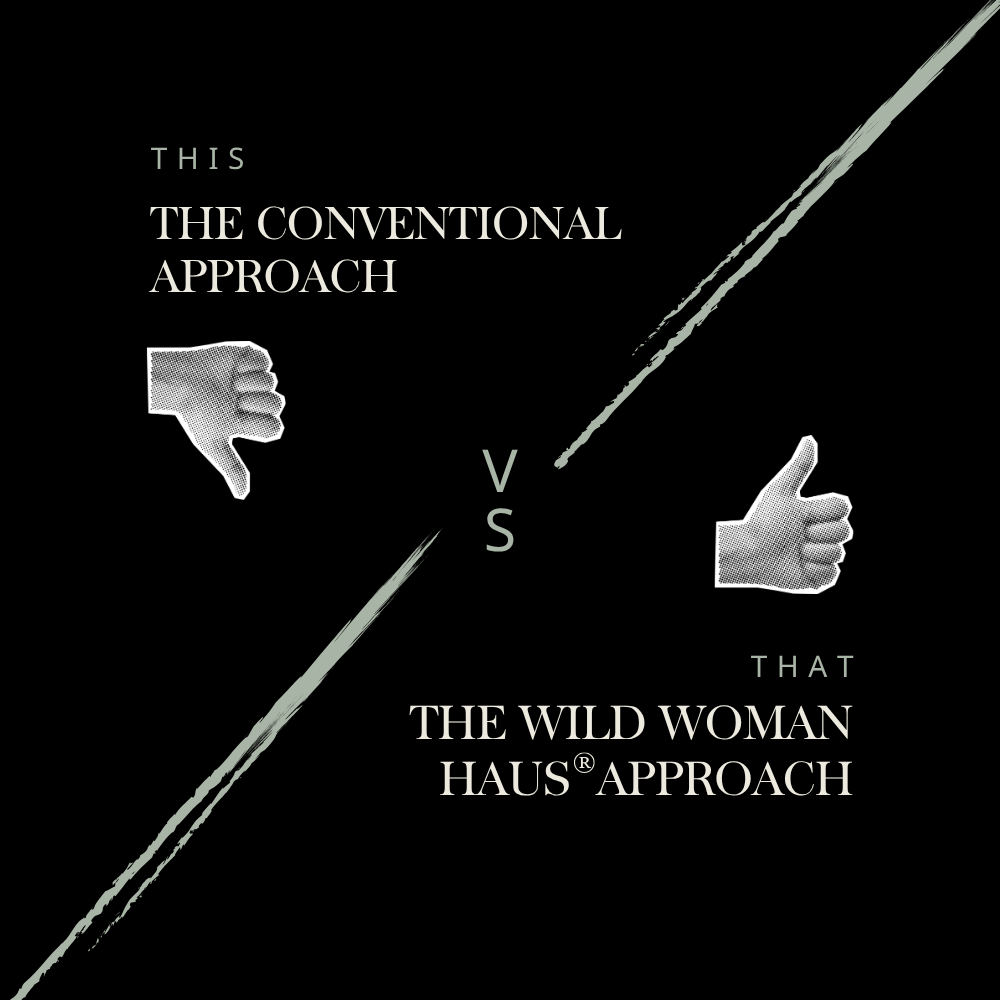
Off The Record™ came to Wild Woman Haus® as a promising card game but struggled to stand apart in a crowded market. Without a deeper narrative or community strategy, it risked becoming another short-lived trend.
Before WWH (Campaign-Driven):
Marketed as a functional “conversation game,” OTR relied on one-off sales and struggled to create loyalty. Messaging was surface-level, emotional connection was limited, and competitors like We’re Not Really Strangers dominated cultural attention.
After WWH (Culture-Driven):
We repositioned OTR from a product into a movement. By anchoring the brand in empowerment and community, launching UGC campaigns, apparel activations, and Connection Circles, OTR became a cultural statement. The shift unlocked retail and investor meetings, media features with Jay Shetty, and new hires to meet demand, all fueled by culture, not just campaigns.
30-Day Consideration-Stage Plan (From Brand to Culture)
Week 1 — Audit the Why + What
- Write a two-line why (literal + abstract value).
- Tighten your positioning statement (problem → POV → promise).
- Align current offers to that positioning; cut or repackage outliers.
Week 2 — Fortify the Home
- Update the homepage hero with story-driven clarity (promise, proof, path).
- Ship one value-rich lead magnet that reflects your archetype and promise.
- Launch or refresh a 3-email welcome series (origin, value, invitation).
Week 3 — Build a Narrative System
- Publish one long-form story (case study, manifesto, episode).
- Repurpose into 4–6 micro-stories for social and email.
- Add one proof point per channel (testimonial, metric, before/after).
Week 4 — Amplify with Culture Signals
- Pitch one partner or publication that shares your audience’s values.
- Test one activation (workshop, live Q&A, pop-up, cohort kickoff).
- Measure resonance signals: saves/replies, list growth, repeat visits, retention.
FAQs
What’s the difference between brand and culture?
Brand is recognizable identity; culture is shared meaning and belonging around it.
Do I need to be everywhere?
No. Own your home (website, email, long-form) and use social/press as amplification.
What makes brand storytelling effective?
Clarity, consistency, and resonance. It must connect meaning to memory and be provable.
Can small businesses build culture?
Absolutely. Small, intentional communities often retain and refer faster.
How do I know culture is forming?
Look for resonance signals: replies, shares, referrals, repeat purchases, and people saying, “this feels like you.”
Conclusion
Brand is culture in motion. Every choice, pricing, promises, partnerships, response times, and stories, sends a cultural signal. When your why and what are clear and your how expresses them with discipline, you move beyond transactions into transformation.
Build the home. Tell the story. Design for reciprocity.
That’s how you go from brand to culture, and build a business that lasts. Longevity requires an architect’s mindset ↗.
→ Explore our Services Guide or book a Discovery Call to turn your brand into a culture that compounds identity, community, and legacy.

