


Introduction
Most founders start from the outside in. They chase followers, land press, or run ads, only to watch the momentum fade. Without a solid foundation, growth collapses.
The truth: your brand needs a home before it can expand. A place you own. A foundation that outlasts trends and algorithms.
The Brand Home Framework begins with the one thing too many skip: a name you can legally own. From there, you layer in your website, email, and storytelling. Social media becomes a window, not the house. Together, these elements create a foundation strong enough to hold growth.
TL;DR — From Brand to Culture
- Most brands sell products; few create culture.
- Culture begins when your why, what, and how align into one system.
- Resonance turns loyalty into community, and community into legacy.
- Every story, system, and signal becomes a cultural act.
- Brands that design for reciprocity don’t fade, they endure.
Why Every Brand Needs a Home
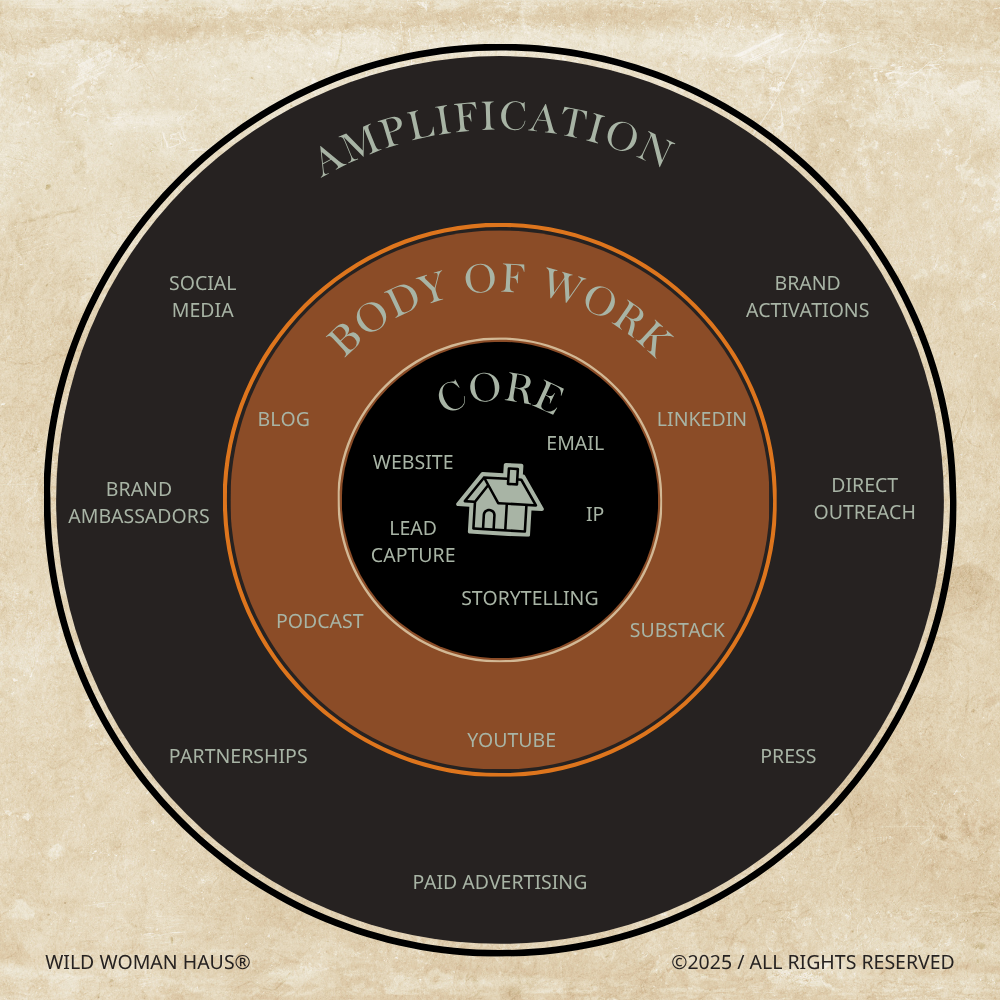
Marketing without a home is like building a mansion on rented land. The view might impress for a season, but when the lease ends, or the algorithm changes, you’re left with nothing.
Your home is where your identity lives. It’s where your story, offers, and community compound into culture. And like any home, it starts with the ground beneath it: ownership. Most companies that invest in marketing spend around 7-10% of revenue on bringing the right foundation (site, owned content, email, trademark) before heavily leaning on rented channels (WebFX, “Cost of Marketing”) to avoid having a fragile base.
Trademark as the Cornerstone of the Home
Before you launch a website, design a logo, or pitch to press, you need to know: can you actually own your name?
A trademark is more than paperwork. It is the cornerstone of your brand home:
- It secures legal ownership of your name.
- It prevents competitors from copying or diluting your identity.
- It protects every investment that comes after, your website, campaigns, and community.
Skipping this step is like building a dream house on someone else’s land. One challenge, one cease-and-desist, and everything you’ve built can crumble.
Decision-stage move: Run a clearance search and consult an IP attorney before investing in design or marketing. Your name is your first asset, own it.
Website as the Home

Once your cornerstone is set, your website becomes the house you invite people into.
- It anchors clarity: who you are, what you do, why it matters.
- Within three scrolls, it should communicate promise and proof.
- It’s the hub for everything else, offers, lead capture, and storytelling.
A strong website doesn’t need to be flashy or expensive. It needs to feel like home, clear, welcoming, and aligned with your brand’s promise.
Email List as the Heartbeat
If the website is the home, the email list is the heartbeat.
- Email is reciprocity in practice: permission to contact = responsibility to deliver value.
- It functions as your newsroom, a direct line where story, offers, and insights sustain culture.
- It builds trust and retention, which is where true revenue lives. On average, businesses see $36 in return for every $1 spent on email marketing (OptinMonster & Omnisend, 2025), making it one of the strongest owned-assets channels.
While social channels fluctuate, your list remains steady. It belongs to you. It keeps your brand alive.
Storytelling as the Design
Storytelling is the design of your home, the way people feel and remember it.
- Information becomes memory when framed as story.
- Long-form content, blogs, podcasts, YouTube, Substack, creates a library people return to.
- Stories compound into search authority, credibility, and repurposable content for every other channel. And when email campaigns are segmented, automated or triggered, average ROI can climb to ~ $44 per dollar spent (Campaign Monitor 2023), showing how much more leverage you get when owned content + email are strong together.
A home without design is just walls. Story is what makes people stay.
Why Social Media Is a Window, Not the House

Social media matters, but it is not the home.
- It is rented space. Algorithms decide who sees you and when.
- Content vanishes quickly, swallowed by feeds.
- Its real role is to serve as a window into your home, an invitation to step inside your website, join your list, and experience your culture.
When treated as the house, social is fragile. When treated as a window, it’s powerful.
The Brand Home Framework

Brand A (Built on Rented Land): Brands that depend entirely on social media to sell, without owning a website, email list, or content hub. When algorithm changes hit, so does revenue.
Brand B (Owns Name, Site, Email, Story Library): Glossier began by building community through Glossier.com, newsletter, customer reviews, then used social to amplify, not to own the customer. The result: brand equity resilient to platform changes.
Practical Framework — The Brand Home Checklist
Your foundation should include:
- Trademark (Cornerstone): Is your brand name protectable and ownable?
- Website (Home): Does your homepage clearly communicate your promise, proof, and offers?
- Email (Heartbeat): Do you have a lead magnet + welcome sequence in place?
- Storytelling (Design): Are you publishing at least one long-form anchor story?
- Social (Window): Do your channels invite people back to your home? Your home is step one of the full Marketing Engine ↗.
30-Day Decision-Stage Plan (Build Your Brand Home)

Week 1 — Trademark Clearance
Run a trademark search and consult an IP attorney. Confirm your name is ownable before investing further.
Week 2 — Website Audit
Refine your homepage. Can a first-time visitor understand what you do, who you serve, and why it matters in 3 scrolls.
Week 3 — Launch a Lead Magnet
Create one value-rich resource for opt-ins. Pair it with a simple 3-email welcome series.
Week 4 — Story & Social Alignment
Publish one long-form anchor story. Repurpose into 4–6 micro-stories for social. Update bios to direct traffic back to your home.
Conclusion
Growth that lasts doesn’t begin with followers, ads, or hype. It begins with a foundation you own.
Trademark protection secures your identity. A website anchors your clarity. An email list keeps your brand alive. Storytelling designs the experience. Social media opens the window.
When these elements work together, your brand doesn’t just survive market shifts, it thrives through them. Once the foundation is set, explore how amplification works ↗.
→ Ready to build your brand home? Explore our Services Guide or book a Discovery Call to lay the foundation for growth that endures.

