


Introduction
Purpose and positioning mean little if no one can feel them. Strategy lives on slides; expression lives in the world. Brand expression is the moment your why and what become experiences people can actually sense, words that land, visuals that signal, systems that build trust. This article shows you how to translate brand strategy into storytelling and presence that compels, retains, and compounds into culture.
TL;DR — Turning Strategy Into Storytelling
- Strategy lives on paper; expression lives in the world.
- It’s how your why and what become felt through words, visuals, and systems.
- Storytelling bridges identity and perception, what people feel and remember.
- Consistency turns moments into memory, and memory into culture.
- Brands that express with intention become brands that endure.
What Is Brand Expression?

From Strategy Into Presence
Brand expression is how your why (purpose) and what (offers + positioning) become the felt experience of your brand. It’s the bridge between positioning and perception, how people actually encounter and remember you.
The Elements of Expression
- Storytelling: words, narratives, and proof that resonate.
- Identity cues: design, voice, and behaviors that signal values-in-action.
- Touchpoints: website, email, social, partnerships, activations, service moments.
Why Brand Expression Matters
The Cost of Shallow Expression
- Hype-driven launches that spike then fade.
- Inconsistent messaging across channels and teams. Brands with consistent messaging across multiple platforms see a 23% greater return on investment than those who are inconsistent (Lucidpress Brand Consistency Report, 2024).
- Experience disconnects, what you say vs. what people actually feel.
The Benefits of Intentional Expression
- Emotional resonance that builds memory and loyalty.
- Culture that compounds through shared signals and stories.
- Efficiency and coherence, every channel reinforces the same core identity.
How to Turn Strategy Into Storytelling

Step 1 — Anchor in Archetypes
Archetypes tap universal human desires, safety, belonging, freedom, mastery, joy. Choosing a primary lens gives your story emotional gravity and helps audiences recognize themselves (current identity) or who they want to become (preferred identity).
Quick action: Name your primary archetype and a supporting one. Write three tone traits you’ll embody (e.g., assured, imaginative, generous).
Step 2 — Translate Why + What Into Story
- Why → Meaning: the belief and contribution behind your work.
- What → Structure: the offers, outcomes, and positioning you own.
- How → Experience: channels, service standards, and storytelling style.
Story formula (one paragraph): Because we believe [why], we focus on [audience + problem] and deliver [offer/outcome] so they can achieve [transformation], expressed through [tone/archetype cues] across [channels/touchpoints].
Step 3 — Use Story as the Bridge
Stories convert information into memory.
Effective brand stories:
- Clarify identity (who we are, what we stand for).
- Build trust (specific proof, promises kept).
- Create resonance beyond transaction (meaning + momentum).
Proof moments to weave into stories:
- before/after snapshots, client quotes, decision principles, behind-the-scenes, service rituals, community wins.
- 64% of consumers say watching a brand’s story in video or behind-the-scenes content makes them feel more emotionally connected to the brand (YouGov / Headstream, 2023).
Brand Expression in Action
The Magnet and the Megaphone
- Branding pulls—identity and culture create gravity.
- Marketing pushes—channels and campaigns amplify the story.
- Story is the bridge that keeps pull and push aligned.
From Information to Culture
When your stories align with your archetype and your delivery, people don’t just consume, they remember, return, and share. Expression becomes ritual, and ritual becomes culture.
Practical Framework — Designing Your Brand Presence
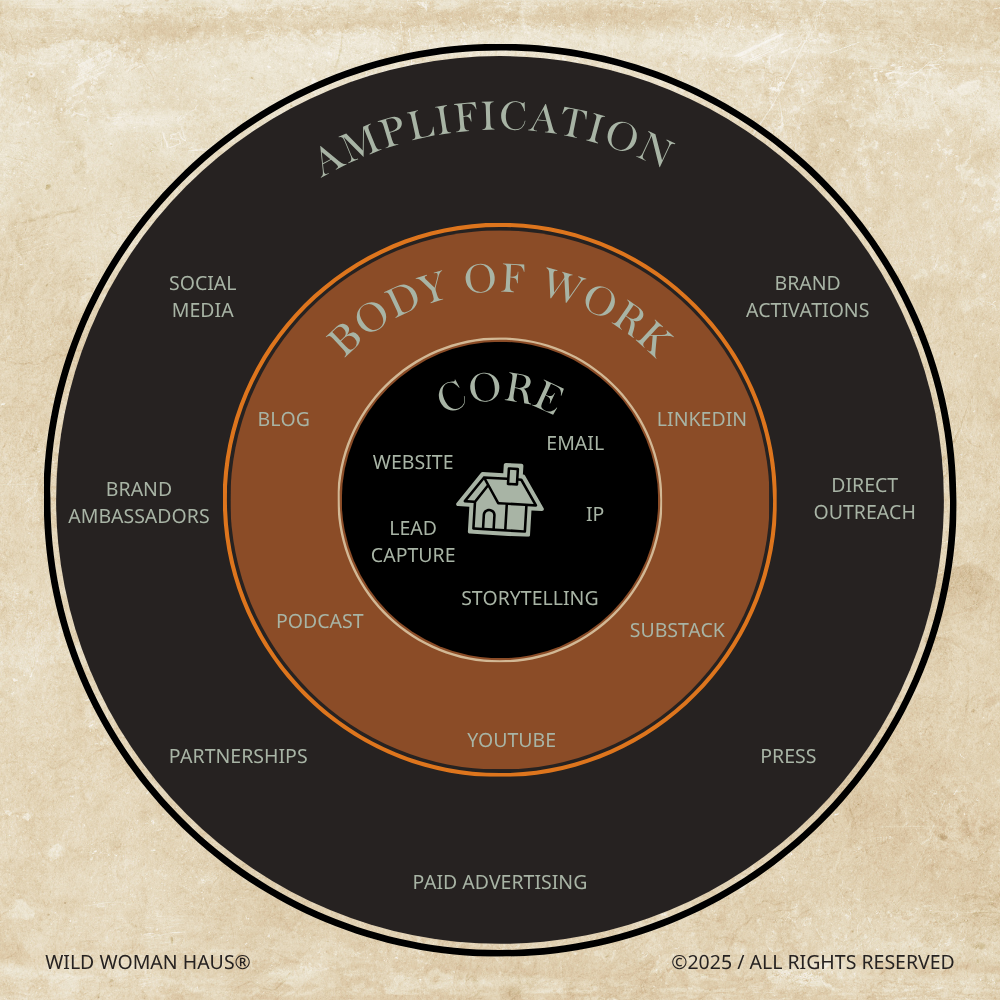
Home (Owned Assets)
- Website (the anchor): Communicate your why/what within 3 scrolls. Show your promise, proof, and pathways.
- Email (the newsroom): Sustain culture with a welcome series, regular value, and clear invitations. Emails that tell a compelling story, rather than purely promotional content, see 55% higher open rates and 30% higher click-through rates (Campaign Monitor, 2023).
- Story library (long-form): Blogs, podcasts, YouTube, Substack, depth for discovery and authority.
- Content marketing using long-form content generates over 3× as many leads as traditional outbound marketing, often at significantly lower cost (Hubspot2025).
Surrounding (Narrative Signals)
- Social: Micro-stories that echo the core narrative; always path back to home. Expression lives across channels, long-form content vs. social media each play a role ↗.
- Partnerships: Borrowed trust, choose aligned audiences and shared values.
- PR/Press: Place your story on larger stages once your home is strong.
Amplification (Cultural Touchpoints)
- Activations: Events and experiences that anchor memory (workshops, pop-ups, demos).
- Community: Spaces for reciprocity (forums, cohorts, member content, office hours) that drive retention.
Brand Expression (Strategy → Storytelling)
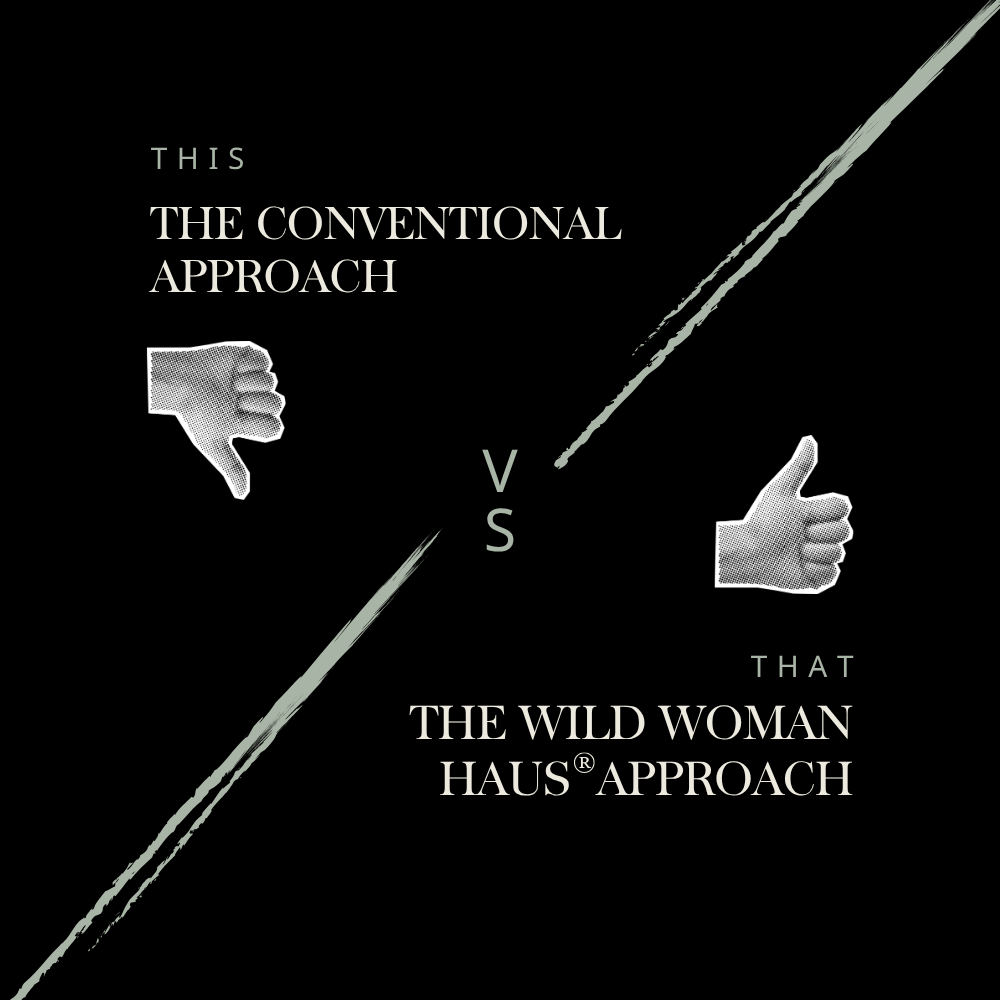
Brand A (Inconsistent Storytelling, Hype then Fade): Brands that chase platform trends (TikTok Videos, IG Reels) with flashy content, but have no voice or brand archetype; audience engagement spikes, then lags when content style changes.
Brand B (Coherent Archetype-Led Expression): Alo Yoga consistently positions itself at the intersection of mindful performance and lifestyle. Their imagery, events, ambassador choices, all reinforce that archetype. Result: customers know what they’re stepping into.
30-Day Consideration-Stage Plan (Express with Intention)

Week 1 — Archetype & Story Audit
- Choose your primary + secondary archetype; define 3 tone traits.
- Draft a one-paragraph brand narrative (why → what → how).
- List 5 “proof moments” you’ll use in content.
Week 2 — Home Foundations
- Rewrite your homepage hero: promise + audience + outcome + path.
- Add one high-utility lead magnet (guide, checklist, template) and a 3-email welcome sequence.
Week 3 — Narrative System
- Publish one long-form piece mapped to your archetype.
- Repurpose into 4–6 micro-stories (social + email snippets).
- Add a case proof block (before/after or decision diary) to your site.
Week 4 — Amplify & Align
- Pitch one partner or publication that shares your values.
- Test one activation (live session, webinar, mini-event).
- Review qualitative resonance signals (replies, saves, forwards).
FAQ
What is brand expression vs. brand identity?
Identity is who you are; expression is how that identity shows up in story, systems, and presence.
Do I need to be everywhere to express my brand?
No. Start with your home (website, email, long-form). Use social and press as amplification, not foundation.
What makes brand storytelling effective?
Clarity, consistency, and resonance. It must connect meaning to memory with specific proof.
Can small businesses do brand activations?
Yes. A focused workshop, webinar, or pop-up can anchor memory and signal culture.
How do I know if my brand expression is working?
Look for resonance signals: thoughtful replies, shares, referrals, retention, and “this feels like you” feedback.
Conclusion
Strategy without expression stays locked on the page. Expression is where people feel your brand, in your stories, service, and shared rituals. When every touchpoint reflects your why and what, your brand becomes more than recognizable, it becomes unforgettable. Together, these elements power the Marketing Engine ↗.
→ Explore our Services Guide or book a Discovery Call to turn your strategy into storytelling and presence that resonates and endures.

