

The macro trends of previous years are here to inform how 2024 will unfold, and how global business will move through a period of structural recalibration. Cultural, economic, and technological forces that once appeared distinct are now visibly intertwined, reshaping how value is created, delivered, and protected.
Rather than introducing entirely new dynamics, the macro trends of 2024 reveal the architecture of systems already in motion. Supply chains, labor markets, digital platforms, and cultural narratives no longer operate independently. Their interdependence has become impossible to ignore.
2024 is not defined by novelty.
It is defined by visibility.
What was once abstract is now operational. What was once theoretical is now lived.
Why We Study Macro Trends at Wild Woman Haus®
At Wild Woman Haus®, we publish annual Macro Trends reports to answer a different kind of business question.
Not what’s trending next, but what conditions are shaping how business must be designed to endure.
Macro trends operate upstream of tactics. They shape consumer behavior before campaigns exist, influence markets before products launch, and determine whether a strategy compounds or collapses over time. When founders focus only on short-term signals, they risk optimizing for relevance while undermining resilience.
These reports exist to help founders, creatives, and strategists:
- See beyond surface-level trends into structural forces
- Understand how cultural, technological, ecological, and economic shifts interact
- Design brands and systems that align with reality, not wishful forecasts
Each year’s report maps the architecture of global business: the invisible pressures, constraints, and opportunities that shape what can be built, sustained, and trusted.
This is not trend prediction.
It is strategic orientation.
The Central Theme of 2024: Interdependence

One of the most enduring lessons of the COVID-19 era is the extent to which modern systems rely on one another. Disruptions across public health, logistics, labor, and manufacturing exposed how fragile isolated strategies become under global strain.
Shortages in personal protective equipment highlighted the risks of concentrated production. Labor volatility revealed the social cost of efficiency-only models. Trust fractured where transparency and accountability were absent.
In 2024, interdependence is no longer treated as a weakness to be minimized. It is recognized as a structural condition to be understood.
The defining work of this year is systems awareness:
seeing how decisions ripple, how failures compound, and how resilience is built not in isolation, but through connection.
The 6 Macro Trends (i.e. Signals) Shaping the Year Ahead
1. Care as Organizational Infrastructure

The pandemic highlighted the importance of care. Mental health, family care, childcare, and self-care. Consequently, care has moved from the margins of society into the epicenter of structural systems.
It is now seen as essential for both individual and communal wellbeing. In the past several years, major employers have elevated employee wellbeing into core benefit structures. For example, Starbucks reconfigured its mental health offering. Through a partnership with Lyra Health, employees can now access a variety of mindfulness and wellbeing resources.
For example, U.S. staff and their families can access up to 20 therapy sessions per year. Microsoft has a similar global benefits framework. Structured childcare assistance programs. Subsidized care options. Family concierge services. Mental health support. All included as part of holistic employee wellbeing provisions.
Furthermore, organizational reconfiguring around care delivers an undeniable ROI. The Care.com 2024 Future of Benefits Report shows an encouraging correlation. Employers who prioritize child care benefits can expect benefits that correlate with positive productivity impacts across the workforce.
Picking up momentum, recent findings from the World Health Organization reveal an economic dimension of wellbeing-focused care. Every US $1 invested in treating common mental health disorders (such as depression and anxiety) = a US $4 return in improved health and ability to work. Investment in employee care continues to accumulate evidence as a structural signal rather than a cultural add-on.
For founders looking to implement this trend into their businesses, consider this. Start with a thorough assessment of employee needs through surveys or direct communication. From there, strategically integrate targeted programs that address those specific needs. This might include partnering with mental health platforms, offering flexible working conditions, or creating family-friendly workplace policies.
By prioritizing care, founders can foster a supportive work environment. Such an environment can enhance employee satisfaction, retention, and overall company performance. This is how founders can build a foundation for sustainable growth and a competitive edge in the market.
2. The Online Panacea
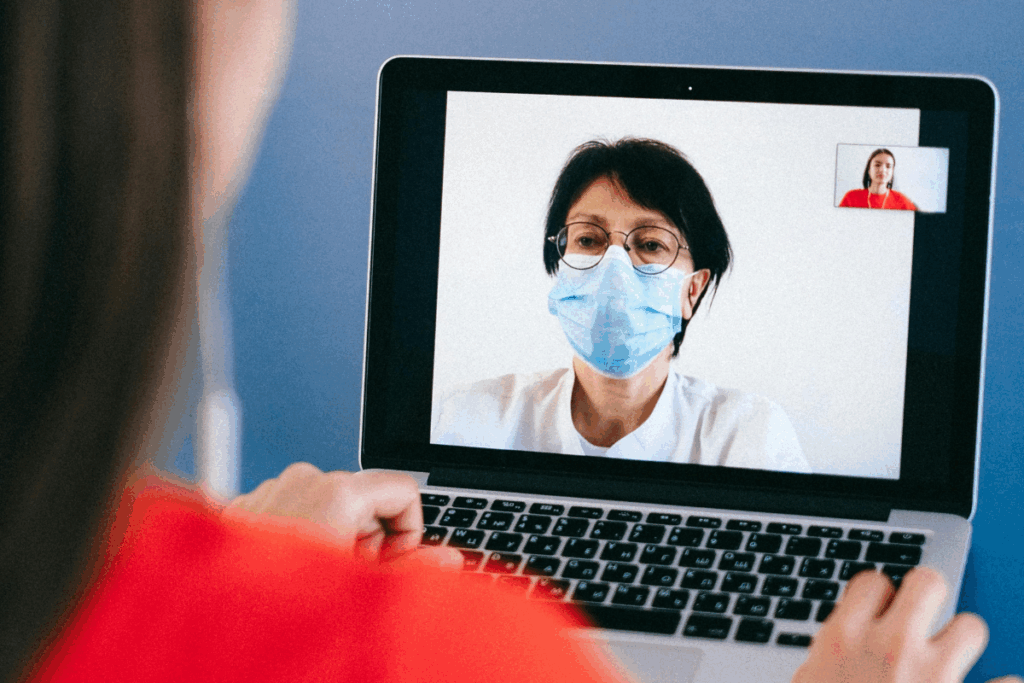
During the pandemic, the need for digital integration became increasingly clear. Businesses, schools, and religious organizations were forced to transition to online platforms. Consequently, the future is leaning towards a ‘circular existence,’ where digital and physical realms merge seamlessly.
The rise of telehealth services and virtual reality platforms for remote work illustrates these real-world changes. Therefore, businesses must prioritize digital accessibility and integrate advanced technologies, such as AI, to remain competitive and inclusive.
Statistical evidence underscores the shift toward digital integration and its impact on business systems. Research from McKinsey & Company finds that digital and AI transformation is driving significant value in customer experience and internal operations. Organizations increasingly integrate advanced tools into core workflows for optimal UX/UI.
McKinsey’s latest global survey on AI use shows adoption of AI across business functions expanding rapidly. Most organizations report using AI in at least one area. Many attribute improvements in efficiency and innovation to these technologies.
The long-term economic potential of AI integration is likewise substantial. McKinsey estimates trillions of dollars in productivity gains as companies mature in their digital adoption.
Market examples reflect this trend. Telehealth services and remote collaboration platforms saw sharp increases in usage during and after the pandemic. This illustrates how digital tools have reshaped consumer and organizational behavior.
For founders looking to implement this trend into their businesses, starting with a clear digital strategy is key. This involves evaluating current technological capabilities and identifying gaps where improvements are necessary. Investing in scalable cloud infrastructure, developing robust cybersecurity measures, and training staff in digital skills are critical steps.
Additionally, fostering partnerships with technology providers can accelerate digital transformation, providing access to cutting-edge tools and expertise. By prioritizing a seamless integration of digital and physical operations, founders are well-positioned to excel in an increasingly digital marketplace.
3. Environmental Urgency
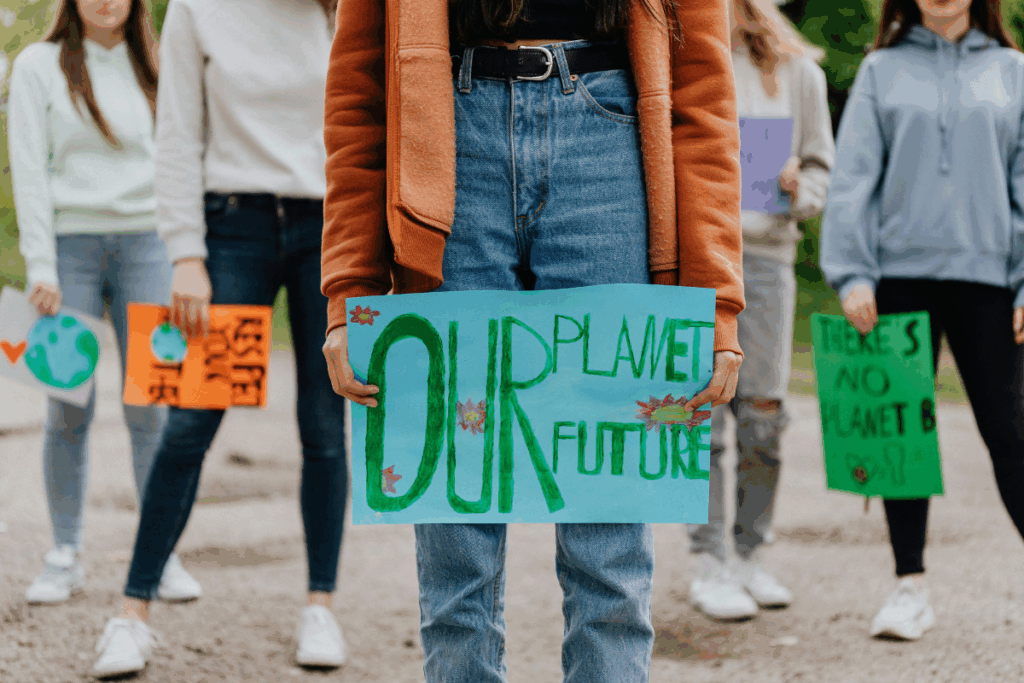
More dramatic, recent shifts in consumer awareness around environmental impact are reflected in broad market behavior. Research from Nielsen indicates that a large majority of consumers globally express a willingness to change consumption habits. Their goal? To reduce environmental harm, signaling a rising expectation for sustainability in purchasing decisions.
Sustainability research from the Global Fashion Agenda associates industry-wide adoption of greener practices with substantial economic potential. They estimate value uplift in the hundreds of billions of dollars by 2030 when environmental measures are scaled.
Market examples capture how these expectations are influencing brand strategies. Patagonia’s Worn Wear program, focused on garment repair and reuse, exemplifies this concept at the campaign level. This campaign takes an approach to reduce product lifecycle waste and reinforce alignment between brand values and consumer priorities.
In parallel, Adidas’s collaboration with Parley for the Oceans developed resource savvy footwear. By incorporating recycled ocean plastic reflects, this campaign integrated material innovation with environmental signal. These patterns suggest that sustainability now functions as both a cultural expectation and a visible marker of organizational identity.
For founders looking to integrate this trend into their businesses, it begins with embedding sustainability into the core business strategy. This could involve auditing current practices to identify areas for improvement, such as materials sourcing, manufacturing processes, and packaging.
Founders can also engage with sustainability certifications and standards to ensure credibility and attract environmentally conscious consumers. Additionally, communicating these efforts transparently and authentically through marketing channels will help build trust and loyalty among consumers. This turns environmental responsibility into a competitive advantage.
By embracing sustainability, founders not only contribute to environmental preservation but also tap into a growing market of eco-conscious consumers. This is how integrity can drive long-term business success.
4. Rewriting Our Narrative

A growing body of research underscores how inclusive representation correlates with measurable business outcomes. Analysis by McKinsey & Company finds that companies in the top quartile for ethnic and cultural diversity on executive teams were roughly 33% more likely to outperform their industry peers on profitability compared to less diverse counterparts. This suggests that diversity and financial performance are aligned across global markets.
Market signals also reflect shifts in how inclusivity is embedded into commercial structures. For example, The 15 Percent Pledge. This commercial structure encourages major retailers to dedicate at least 15% of shelf space to Black-owned brands. Sephora is a notable name who has participated in this shift. seen uptake from retailers like Sephora. This signals how representation is reshaping product ecosystems within mainstream retail.
At the same time, major technology and creative platforms are amplifying underrepresented voiced. For example, Adobe has dedicated campaigns and programs designed to elevate creators from diverse backgrounds. This reinforces how inclusivity increasingly intersects with visibility and cultural influence in creative markets.
So, how do founders implement this macro trend into their businesses? It starts with a commitment to diversity and inclusivity at every level of the organization. This can be achieved by diversifying hiring practices and offering training programs that enhance cultural competency across the workforce.
Additionally, engaging with and supporting diverse communities through partnerships or sponsorships can help align the brand with these values.
Founders should also consider how their products or services can meet the needs of diverse populations. This not only expands their market but also contributes positively to social change. By embedding inclusivity into the business model, founders can build more resilient and innovative companies. This is how business can reflect and serve today’s diverse global marketplace.
5. Back to Basics

After years of accelerated timelines and always-on expectations, the structural limits of urgency-driven work cultures have become increasingly visible. Research from the American Psychological Association indicates that the majority of employees report persistent work-related stress. Fundamentally, stress stemming from blurred boundaries between professional and personal life cited as a primary driver. These conditions have surfaced burnout not as an individual failing, but as a systemic outcome.
In response, organizations have begun experimenting with alternative rhythms of work. Companies such as Google and Slack have introduced meeting-free days and flexible scheduling structures. Structures such as these reflect a broader reassessment of how attention, energy, and productivity are sustained over time.
Empirical research supports this shift. Studies conducted by Stanford University have found that remote and flexible work arrangements can correspond with productivity gains. This can be attributed in part to reduced stress and improved work-life integration.
Large-scale organizational trials reinforce this pattern. Microsoft Japan’s four-day workweek experiment reported a significant increase in productivity alongside improved employee wellbeing. Additionally, companies such as Basecamp have long documented the benefits of reduced work hours on focus and job satisfaction.
Together, these signals suggest a growing recalibration away from urgency as a default operating mode. Instead, steps toward systems that prioritize continuity, sustainability, and cognitive bandwidth as performance variables are being taken.
For founders aiming to implement this trend, it begins with understanding the specific needs and stressors of their teams. Instituting flexible work policies, encouraging regular breaks, and promoting a results-oriented work environment can be effective first steps.
Additionally, founders should consider regular check-ins with employees to gather feedback on these initiatives. This ensures they truly meet the team’s needs. Additional ways to foster an organizational cutlure that respects and promotes work-life balance? Transparent communication about the importance of mental health and personal time. By prioritizing employee wellbeing, founders not only enhance productivity but also build a loyal, motivated team.
6. The Case for Collaboration

Creative output is being revalued for its role in problem solving. It is no longer treated as surface-level expression. Creativity now functions as a response to complexity.
This shift is accelerating the design economy. It is also reshaping how organizations address systemic challenges. Pandemic-era constraints intensified experimentation across sectors. Brands and consumers began generating new ideas, products, and services through a mix of science, imagination, and speculative thinking.
Global data reflects this momentum. The Global Innovation Index 2021 reported sustained innovation activity during the Covid-19 period. Switzerland, Sweden, the United States, the United Kingdom, and South Korea ranked among the top innovation economies. In the United States, applications to register new businesses rose by 42.6 percent between December 2020 and January 2021. This increase signals heightened creative and entrepreneurial activity during disruption.
Creativity also intersects with shifting talent expectations. Microsoft’s 2021 global workplace research found that 40 percent of people were considering leaving their current roles. This trend reflects a reassessment of how work aligns with personal values and wellbeing. Research from the IBM Institute for Business Value further shows that many employees prioritize work-life balance and company ethics alongside compensation.
New operating models illustrate this shift. Cross-industry collaborations are forming to address issues such as climate risk, housing, and digital trust. These initiatives bring together businesses, designers, and communities to generate shared solutions. Participation becomes part of the design process itself.
Futures thinking is also moving into daily operations. Organizations are using prototyping and scenario-building to explore new possibilities. These tools support adaptation in volatile environments.
As 2024 unfolds, creativity is maturing into infrastructure. It supports resilience, collective problem solving, and long-term adaptability.
Conclusion
As we approach 2024, the outlined macro trends are set to redefine the global economic landscape. With a strong emphasis on sustainable practices, inclusivity, and digital integration, businesses are faced with the imperative to adapt swiftly. These shifts are not just responses to changing consumer expectations but are also critical to thriving in a rapidly evolving marketplace.
Key Points Summary:
- Emphasis on Care: Businesses are recognizing the importance of enhancing care-related services and facilities, which significantly contributes to improved work-life balance and productivity.
- The Online Panacea: The seamless integration of digital and physical realms is crucial, necessitating investments in digital infrastructure and accessibility to remain competitive.
- Environmental Urgency: With rising consumer awareness, companies are moving towards sustainable practices, highlighting the need for transparency and commitment to environmental stewardship.
- Rewriting Our Narrative: The drive for inclusivity is reshaping how businesses approach diversity within their workforce and market engagement.
- Back to the Basics: A shift away from ‘urgency culture’ towards prioritizing meaningful work and personal time is essential for fostering employee satisfaction and productivity.
- The Case for Collaboration: Encouraging creativity and collaboration within teams is proving essential for solving complex problems and enhancing innovation.
By staying informed and proactive, companies can not only respond to these trends but also leverage them to foster growth, innovation, and long-term success. As these trends continue to unfold, staying tuned for further insights and adapting strategically will be crucial.
Final Thought:
As you venture forward into the business world, consider how these macro trends can influence your strategies and operations for 2024 and byeond. The ability to adapt and innovate in response to these evolving drivers will be a significant determinant of your success. Think of these changes not just as challenges to overcome, but as opportunities to lead and redefine the standards of your industry. How will you harness these trends to pave the way for a sustainable, inclusive, and technologically adept future for your business? Reflect on this as you plan your next steps in this dynamic business landscape.
Want to go deeper?
Listen as Tristan unpacks these macro trends in real time on The Wild Woman Hotline.
In Episode 40: “2024 Macro Trends Revealed: The Future of Business in a Pandemic-Transformed World,” she explores the six core drivers shaping how business, culture, and systems are evolving in 2024 and beyond.
→ Tune in to hear the patterns behind the data and what they signal for the future of work and commerce.

